Vacation Knowing Your House is Safe

Travel stress-free knowing your home is well taken care of. If you’re heading on vacation here are 6 key preparations for your long-term absence.

  • House Calls: Ask a friend, family member or neighbour to drop by your home regularly to pick up mail, flyers and community bulletins. Have any newspaper and magazine subscriptions paused. Arrange for a snow removal service or local teen to clear your porch, driveway and sidewalk so your home looks occupied while you’re away.
  • Set timers on your lights: Use a timer to have your indoor and outdoor lights automatically turn on and off throughout the day. You can consider using a Wi-Fi enabled smart light system to remotely control the lighting from your mobile device.
  • Secure the premises: You can consider using a security system to monitor the premise while your away. There are specialized locks you can instal on sliding glass doors and deadbolt locks on windows. Close curtains on windows that are accessible on the ground level.
  • Control the temperature: Set the thermostat high enough to keep the water pipes from freezing. You can also install a water-flow sensor on your main water supply pipe, which sends an alert to your cell phone if there’s an issue with your interior or exterior pipes.
  • Tech upgrades: Monitor everything from doors and windows to smoke alarms, package deliveries and lights with new smart technology. Some devices allow you to set up customized alerts too, like if a courier arrives.
  • Contact your insurance provider: Let your insurer know you’ll be away for a while. Most home insurance policies will require someone- like a friend or neighbour- to check in on your home while it’s unoccupied. It’s important to follow your policy’s requirements so if something happens at your house while you’re on vacation you’ll still be covered.

Moving Guide: Home sweet new Home!

Whether you’re upsizing or downsizing, here’s a timeline of what to do and when, plus packing tips and essential tasks to ensure a stress-free move

Moving stirs up all kinds of emotions- you’re excited to start a new chapter, but it’s also a lot of change. It’s no wonder we get so anxious about it. Procrastination can be the biggest stressor when moving. Luckily, there are steps you can take to ensure an organized and efficient move. The key is to prioritize your task list and plan early.

  • As Soon As Possible

    Organize the papers:

    Make a file for documents related to your move, including receipts, estimates, legal documents, notes and checklists. Create a digital folder for email confirmations too. The new owners of your old home would appreciate a folder with helpful info as well as warranties, security codes, mailbox keys, and garbage pick-up schedule.

  • Eight Weeks Ahead

    Book your vehicle:

    Get at least 3 quotes whether you’re renting a truck or hiring a full-service moving company at least 6-8 weeks before the big day. If your moving into a condo, book the elevator and parking space for your moving truck or container in advance

  • Five Weeks To Go:

    Clear the clutter:

    Don’t pay to move things you’ll never use! Sort through each room and decide what items to keep, donate, or recycle. Stock up on packing tape, paper, markers and boxes. Start packing things you won’t need prior to the move and clearly label each box with the room that it goes in. If you’re using a moving company, check if there are restrictions on transporting aerosols, propane tanks, lawn mowers and the like.

  • Four Weeks:

    Communicate your move:

    Notify all the utility and service providers for your current home that you’re moving. Set up accounts for your new property one month in advance to avoid any service disruptions. Let Canada Revenue Agency, your employer, banks, healthcare providers, home and auto insurance companies and subscription services know of your address change. If you have kids, also look into school registration in your new neighbourhood.

  • One to Four Weeks:

    The countdown is on:

    At this point it is all about filling boxes. Try to pack at least one box every day to avoid panic later on. The week before your move, reconfirm all arrangements with your lawyer, mortgage provider, moving company, cleaners, and anyone else helping you the day of the move. Pack a bag with the necessary toiletries, medications, and clothing you’ll need for a couple of days, along with a box of critical items in case you get to the new house before the moving truck arrives. This should include toilet paper, a shower curtain, towels, a utility knife, dish soap, cleaning and pet essentials, a toolbox and the all-important coffee maker with mugs!

  • The Day Of

    With all the commotion, don’t forget to stop for a bite to eat, it’s important to keep your energy up and show you appreciate those helping you. Try to stay calm and let all your pre-planning jump into action. Talk to your new neighbours, introduce yourself, and if your moving truck or helpers vehicles are blocking the parking for the street, place an apology note in their mailboxes if you can’t speak with them directly. Once you’ve settled into your new place, update your driver’s licence and health card with your new address.

While moving can be hectic, it’s possible to make the adventure easier. Whether you’re relocating around the corner or across Canada, an organized and efficient move begins and ends with having a proper plan and sticking to it.

Do I need a building permit?

I want to renovate, do I need a building permit? The short answer is yes! In most cases you will be required to get a building permit issued by the jurisdiction you live in. Step 1, go on your city website and search for building and renovating. Most of the time this will link you to an extensive list of what projects do and do not require a permit. Know what your area requires before hiring your contractor so that you can go into that initial meeting prepared to talk about permits.

It is much easier to get a building permit upfront and start your project in accordance to your city regulations then have a nosy neighbour call the city to report you. If you do get tagged without having a permit, the city does not show leniency, you could face a hefty fine and have your project shut down for a lengthy amount of time. You many think your neighbours would never do this but it happens ALL THE TIME!

Did you know that most cities also have a building permit search function on their website? This is a useful tool anyone can use to see if a building permit was issued within the last 12 months. When buying a “newly renovated” home, do the search and find out if the homeowner took the necessary steps to ensure the project was done to code. This is also a tool that people use when they see a dumpster on your property or trades people coming and going. One quick search and if no permit is found a quick call to the city and your project is on pause. Most of the time, a neighbour is frustrated with trades using “all the parking” and this fuels a call to the city. It is always better to take the proper route, get a permit, be on the cities good side, get your project done to code and inspected, love your renovation and the process!

Here in the City of Hamilton, the stats are in and the first time has surpassed $2 billion worth of construction projects, making 2021 the first time the city has ever reached the $2 billion-dollar mark in construction value in one year. This milestone represents building projects in the residential, institutional, commercial, and industrial sectors.

  • The $2-billion mark was reached on Monday, November 22, 2021, after staff issued new residential construction permits in Glanbrook. ย 
  • Total construction value up to and including October 2021 is comprised of 59% residential, 39% industrial/commercial/institutional, and 2% miscellaneous.
  • Residential has increased 53.3% over the previous 3-year average for a total of $1,143,411,173.
  • Industrial, commercial, institutional has increased by 86% over the previous 3-year average for a total of $746,840,407.
  • 2021 marks the first time the city reached the $1 billion-dollar mark in the first half of the year (June 2021).
  • The city has reached the $1 billion milestone eleven out of the past twelve years.
  • The building industry supports Hamiltonโ€™s economic growth, provides employment opportunities, new housing, and places for businesses to thrive.

Check out the City of Hamilton website for more information and if you have any questions don’t hesitate to reach out to me!

https://www.hamilton.ca/home-property-and-development/building-renovating

Variable vs. Fixed

What type of mortgage do you pick in a changing economic environment?

With the recent Bank of Canada rate increases, many buyers are left wondering what the best option is for a mortgage. These charts were shared to me from a trusted mortgage specialist and they outline how over the long term a variable rate is the way to go. It can be scary to see the rates jump .5% overnight, and with another rate increase expected in July, buyers are faced with the decision to either lock in a fixed rate ahead of each increase or go the variable route. Don’t take my word for it, go talk to your trusted mortgage provider, educate yourself, and feel free to reach out if you have any questions.

More Older Adults Are Moving in With Their Children

One In Five Boomers Have Children Living At Home, Higher In Toronto and Vancouver, but there is a spike in the opposite trend

One of the most interesting things about North Americaโ€™s societal evolution is the change in family dynamics. For many years, people would have children, and these kids would stay in the family home until they finished school. At that point, most children would move out, establish new careers, and then start families of their own. In recent years, however, some children have opted to stay home or even move back because of their employment and/or economic situation.

We also see the opposite, as more and more elderly parents are moving in with their adult children. This upward trend is almost certain to continue now that seniors outnumber children in Canada.

At the national level, 12% of Boomers identified having adult children 25 years or older at home. Similar rates were found in BC (12%), and it was a little higher in Ontario (13%). More affordable Quebec (11%) came in lower, but not by much.

โ€œShared livingโ€ โ€” when adults live under the same roof but are not romantically involved โ€” is on the upswing. A major factor in the trend isย parents living with their adult children, a twist on the โ€œboomerangโ€ phenomenon of young adults moving in with their parents.

In the United States, nearly 79 million adults, or 31.9 % of the adult population, live in a โ€œshared household,โ€ meaning one in which two or more adults not intimately attached live in the same home. ย 

Thatโ€™s a slight uptick from the 27.4 percent recorded in 2004, when homeownership reached its peak and before the foreclosure crisis.

More adults are living with their parents, and it may be due to high home prices. Theย Royal LePage 2021 Boomer Survey (itโ€™s a thing) found one in five Boomers have kids at home currently. Breaking that number down, over half of those are adults 25 and older. A significant number of these Boomers said they donโ€™t expect these kids to ever leave home.

But whileย young adults moving in with their parents continue to account for the bulk of such households, thereโ€™s another reason at play for the increase: Parents taking up residence in their childrenโ€™s homes.

Older parents moving in with their adult children make up a much larger component of โ€œshared livingโ€ than they did a generation ago.

โ€œAdults who live in someone elseโ€™s household typically live with a relative,โ€ Pew stated in its report on its findings. โ€œToday, 14 percent of adults living in someone elseโ€™s household are a parent of the household head, up from 7 percent in 1995.โ€ By contrast, โ€œsome 47 percent of [such] adults are adult children living in their mom and/or dadโ€™s home, down from 52 percent in 1995.โ€

These trends are leading to new ways of thinking about housing construction and design that will satisfy the multi-generational family living situation.

Itโ€™s more clear now than ever that our traditional ideas of housing are being greatly challenged by the current conditions of the world. With that in mind, many people are turning to housing alternatives that offer different lifestyles. One growing trend in Canada’s major cities and beyond isย multi-generational housing.

The rise of multi-generational housing is changing the face of Canadian housing and will influence buying trends in real estate in the near future.

Have questions about buying, selling, or renovating to accommodate an older adult moving in?

Contact me today!

Hamilton Art scene is back in full effect!

Hamilton has a thriving art scene and many artists have chosen to call Hamilton home because of the availability of cool work spaces and the lower price tag to buy/rent compared to our neighbouring big cities. With close proximity to urban and rural inspirations Hamilton has been pegged as the new art hub, with the slogan “Art is the new steel” ringing loudly.

With Art crawl starting up again this spring along James St. North and the much anticipated Super Crawl back in full effect, Hamilton will be buzzing with all sorts of events, art, and music!

Another amazing event coming up is the “The square Yard Show” at the Paul Elia Gallery. This show is featuring so many awesome Hamilton Artists and is taking place in such a cool space. This is an art show not to be missed!

If you are as excited as I am about local art then check out this line-up!

We can’t forget about our local treasure The Art Gallery of Hamilton! With in-person visits to the amazing exhibits, summer camps, and events back this spring/summer you need to add a visit to your schedule!

https://www.artgalleryofhamilton.com/

Home Inspections

There are so many benefits to having a Home inspected by a professional. We’ve seen a very busy Seller’s market recently with many Buyer’s opting to skip the inspection condition. Yes to get the house you may need to strike the condition, but it doesn’t mean you should skip the inspection. You can always have a home pre-inspected prior to your offer or another option is to have it inspected in one of your post-buy visits prior to closing. Both options here have the inspection taking place on your own dime but the information and report you get out of it is so important to your satisfaction with your new home. Good inspectors can tell you what the red flags in your home are and also any maintenance issues you may need to address. If major issues are found in an inspection prior to closing, often these can be addressed with your lawyer or between realtors. Moreover a good local inspector can sometimes offer up referrals to good local trades that may be able to address any issues that are found in the inspection. The reassurance and relief that you feel having a home inspected is worth way more to your mental health then the money spent to have one.

Heritage Designated Properties in Hamilton

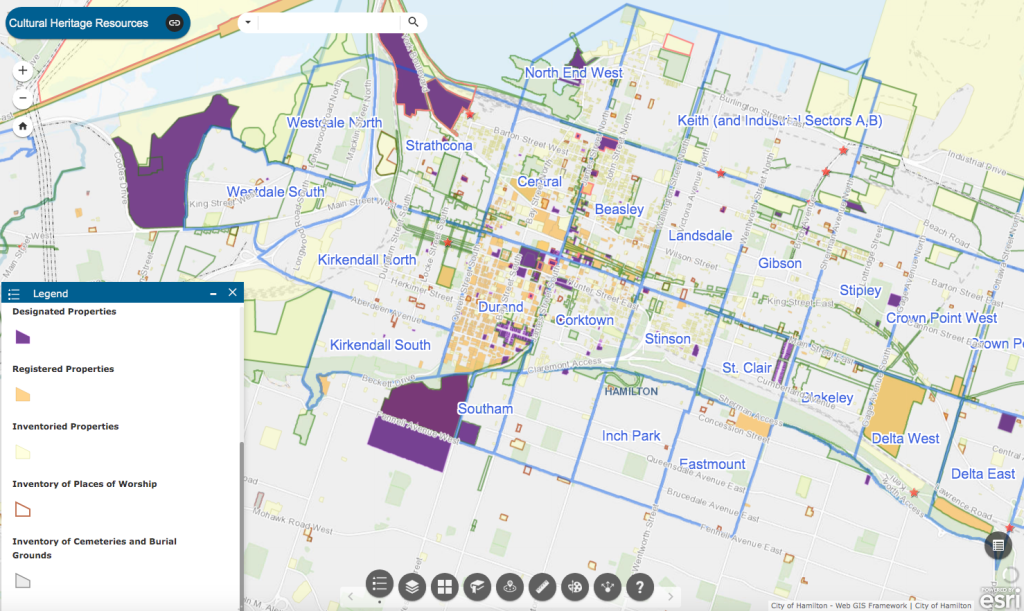
If you love maps as much as I do then you’ll love this really cool mapping tool available on the City of Hamilton website. https://map.hamilton.ca/

The mapping tool gives you many options of different things you may want to map in the Hamilton area. I choose to map the Cultural Heritage Resources in the city. Ever wondered if your house is designated a Heritage house? Well if you live on St. Clair Ave. or in the Durand area of the city it’s likely your either a designated or a registered Heritage property.

Where are the Heritage Conservation Districts in Hamilton?

The City of Hamilton has seven Heritage Conservation Districts:

  • Cross-Melville
  • Durand-Markland
  • Hamilton Beach
  • MacNab-Charles
  • Mill Street
  • St. Clair Avenue
  • St. Clair Boulevard

The criteria used to determine if a property is Designated as a Heritage property are as follows:

  • The property has design value or physical value because it:
    • is a rare, unique, representative, or earlyย  example of a style, type, expression, material, or construction method;
    • displays a high degree of craftsmanship or artistic merit; or,
    • demonstrates a high degree of technical or scientific achievement.
  • The property has historical value or associative value because it:
    • has direct associations with a theme, event, belief, person, activity, organization, or institution that is significant to a community;
    • yields, or has the potential to yield, information that contributes to an understanding of a community or culture; or,
    • demonstrates or reflects the work or ideas of an architect, artist, builder, designer, or theorist who is significant to a community.
  • The property has contextual value because it:
    • is important in defining, maintaining, or supporting the character of an area;
    • is physically, functionally, visually, or historically linked to its surroundings; or,
    • is a landmark.

If your a homeowner of a Designated Heritage property or are looking at becoming a property owner of one of these homes, you may be wondering what your responsibilities are?

  • Designation requires a property owner to seek approval to make any alterations or changes that may impact the designated heritage attributes or the Reasons for Designation.
  • Designation requires the property owner to seek the permission of Council to demolish a designated structure.
  • In the event of change of ownership, the new owner of a designated property must give notice of the change of ownership to the Clerk within 30 days after becoming owner of the property.
  • Owners of designated properties shall maintain the heritage property and its heritage features in a safe and secure condition.

Common misconceptions about Heritage Designated Properties:

  • Designation does not legally restrict the use of a property.
  • Designation does not prohibit alterations or additions. Rather, designation ensures changes are appropriately managed through the Heritage Permit process to ensure the long-term protection of significant cultural heritage resources.
  • Although designation is registered on title, it does not restrict the sale of property.
  • Designation should not impact your insurance rates or coverage.
  • Studies have shown that designation does not negatively impact price and may actually be correlated with increases in property values. (see Report PED20030)
  • Designation does not require property owners to open their property to the public.
  • Designation is not arbitrary or frivolous. Designation criteria are specific;  the principle requirements are that a property possess design / physical, historical / associative and / or contextual value.

Within the City of Hamilton, there are approximately 281 individual properties designated and another 349 properties designatedย in the 7 Heritage Conservation Districts. The aim of the City of Hamilton in designating heritage properties is to:

  • Recognize the importance of a property to the community;
  • Identify and protect the propertyโ€™s cultural heritage value;
  • Encourage good stewardship and conservation; and,
  • Promote knowledge and understanding about the property and the development of the community.

If you’d like more information on how to buy or sell a Heritage home contact me today!

Moving With Kids

Uprooting your kids from the place they’ve called home, and perhaps their school and friend group can be as heartbreaking as it is exciting. The very act of moving disrupts the regular routine and flow of your families life. Reducing moving stress helps kids adjust to the transition and even look forward to the change.


The best way to minimize the stress of moving with kids is to look for possible stressors and make a plan for how to address them. Here are some tips to help your move with kids run smoothly.

1. Get your kids involved in the moving process

Try to involve kids in the moving process as much as possible. Having your child feel part of the process can make a difference in your childโ€™s feelings towards their new home.

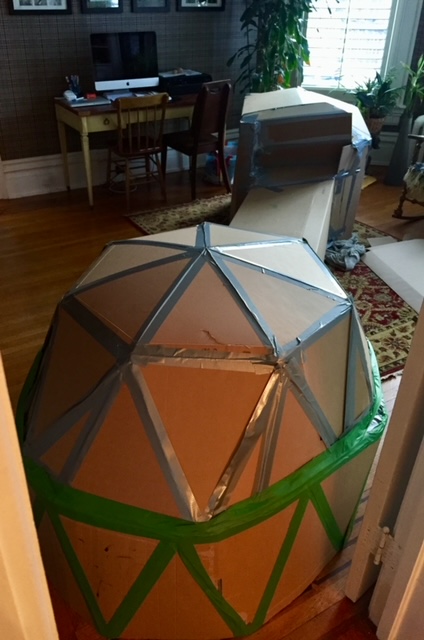
There are a few ways you can do this. The kids can help you run a yard sale, give their top three choices for repainting the walls of the living room, or even help you narrow down the homes youโ€™re considering. If you have little ones, there are tons of creative ways to repurpose packing material and create moving-day entertainment, think: a moving-box fort!

Alternatively, let the kids pack a few of their ownย boxes. As an extra tip, try customizing moving box labels with your kidsโ€™ names written on them, and let them decorate their boxes with stickers โ€” theyโ€™ll love it!

2. Use your time wisely

In some cases, you may have months to prepare for your move, but in other cases, you may have a matter of weeks. If you have the time, use it to your advantage. Prepare the kids for the move by giving them as much information about your new home as possible, such as pictures of what their new bedroom will look like, where theyโ€™ll go to school (even try and schedule a school tour with their new principal), or photos of the local playground theyโ€™ll visit.

If youโ€™re moving on a short schedule or long distance, use the time at your old home to make a plan with your child about all the steps of the moving process. They may have questions about what will happen and you can assure them of all of the exciting elements of moving into a new home.

3. Visit your new neighbourhood

Not all families will have the luxury of visiting their new neighbourhood with their kids before moving day. If you can, plan on taking a walking tour of your new neighbourhood, the downtown area, or their new school.

Before you visit, find out what kids-oriented activities are happening during your visit. A visit to the local park may help open their eyes to the new neighbourhood. Moving with your kids doesnโ€™t have to be a surprise event.

4. Find ways to say goodbye

Between your childโ€™s final day at their old school, moving to a new neighborhood, and making new friends, thereโ€™s a lot to fear about the move. Hosting a goodbye party will help give them some closure as they leave their friends and old home. Host a party at your old home as a celebration of the time your family spent there and invite the neighbors. Alternatively, hold the party in your new home as a grand welcome to your new space and invite your new neighbors.

Alternatively, for older kids, setting up a email address that they can use to connect with old friends can be reassuring. Using FaceTime to show off their new home, or connecting with a buddy over online games can be a helpful way of making goodbye not feel like forever.

5. Minimize change upon arrival

Particularly if youโ€™re moving with young kids, minimizing change is essential. You may be moving to a new house or even a new province, but you can keep things familiar by setting up their bedroom furniture in the same arrangement or maintaining the same morning routines. Try to preserve any traditions you held in your old home, like Saturday family movie nights or Sunday morning brunch. This will help ease the transition.

You wonโ€™t be able to keep everything the same, but the little pieces you preserve in the transition can make a world of difference.

6. Pack a โ€œMoving-Dayโ€ Bag

Your children probably wonโ€™t want to be separated for the next week from their favourite stuffy or Nintendo switch, so make sure that theyย pack a bag in advance of the move. Explain that it may take a week or two for all of the moving boxes to be unpacked, so they should keep everything that they want close by in their โ€œmoving-dayโ€ bag.

You can even pack them a special moving-day bag as a surprise with snacks for the trip and a game or toy for when they arrive.

7. Pack the kids bedroom last and unpack it first

Setting up your kids’ rooms is a crucial first-day goal. Creating a comfortable safe haven can alleviate stress and give your kids a base to hang out in during the chaos of unpacking boxes in other areas of the home.


Every kid will react differently to moving. Be patient. Some kids may yell and scream, some may go quiet and be hurting without you knowing. You may get frustrated with their reactions to moving but try to listen for the feelings behind the words/actions and empathize or share your ambivalence. Sharing how your feeling can help kids understand the feelings that they are experiencing. Try saying things like “I’m excited to move, but I’ll really miss our neighbours”. Hearing what you’re going through can help them put their own feelings into words.

For more tips on moving with kids, check out these great articles:

Self-employed but want to qualify for a mortgage?

Film Industry, realtors, graphic designers, general contractors โ€“ many Canadians are self-employed. But they all share the same complication when applying for a mortgage: proving their income.

It may seem like there are too many hurdles to getting pre-approved but it is possible.

Here’s a 4min read explaining more: Self-employed and looking for a mortgage: https://rates.ca/resources/self-employed-mortgage-what-you-need-to-know